Stainless Steel Weld Caps In Petrochemical Piping: Selection, Standards, And Failure Mitigation
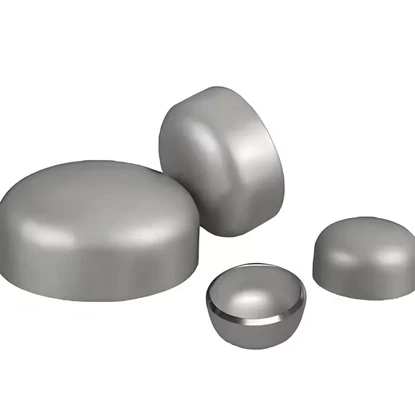
Choosing the correct pipe end closure is critical for maintaining systemic integrity under high-pressure conditions. In industrial fluid networks, a stainless steel weld caps installation provides a permanent, leak-proof seal. Petrochemical facilities rely on these components to terminate lines safely while enduring corrosive environments, shifting thermal loads, and mechanical stress profiles.
Engineering Standards and Material Specifications
Compliance with international design codes ensures operational safety. Standard configurations typically adhere to ASME B16.9 for factory-made wrought dimensional guidelines. Petrochemical systems frequently utilize a butt weld pipe cap to ensure smooth flow transitions and full-penetration joints. Material grades generally involve ASTM A403 WP316 or WP304 to prevent chemical degradation.
| Material Grade | Pressure Rating (Class) | Common Application |
|---|---|---|
| ASTM A403 WP316 | 3000 / 6000 | Sour gas processing, high-chloride lines |
| ASTM A403 WP304 | 1500 / 3000 | General hydroprocessing, utility water |
| Duplex S31803 | 6000 + | Severe chemical synthesis, desalination |
Selection Logic for Industrial Systems
System designers evaluate specific parameters to determine the appropriate component geometry and thickness. The selection process follows a defined technical sequence:
-
Determine the schedule rating matching the adjacent pipeline to ensure uniform wall thickness.
-
Verify chemical compatibility with the transported media, prioritizing stainless steel buttweld caps for acidic streams.
-
Assess the thermal dynamics to prevent localized stress concentration at the termination point.
-
Select weld on pipe caps steel variants that match the exact welding procedure specification of the project.
Analyzing Mechanical Failures
Improper installation or incorrect specification leads to systemic vulnerabilities. A common issue involves using thin-walled steel buttweld caps in high-vibration segments, causing fatigue cracking at the weld root. Intergranular corrosion occurs if the heat input during the welding process is not strictly regulated.
-
Stress Corrosion Cracking: Driven by chloride exposure combined with high residual tensile stress.
-
Hydrogen Embrittlement: Affects non-optimized stainless buttweld caps when handling high-pressure hydrogen gas.
-
Fatigue Failure: Triggered by cyclic pressure pulsations in poorly supported piping manifolds.
Lifetime Cost and Economics
Long-term financial efficiency depends on reducing maintenance intervals rather than minimizing initial procurement expenses. Investing in premium stainless steel weld caps minimizes the risk of unplanned shutdowns, which can cost processing plants thousands of dollars per hour in lost production. Correct material selection eliminates early replacement cycles, optimizing total asset lifecycle expenditure.