The Principle, Advantages, Disadvantages, And Application Limitations Of Stamping For Producing Concentric Reducers.
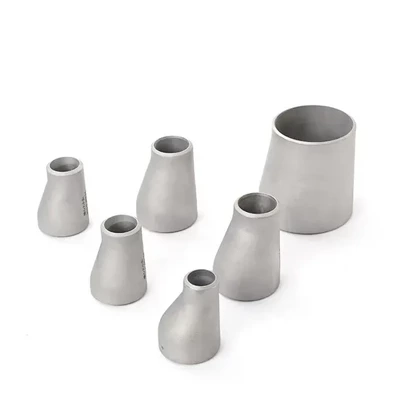
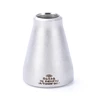
Stamping production for concentric reducers utilizes hydraulic presses and precision dies to compress cylindrical metal tubes into tapered industrial fittings. This forming method ensures uniform wall thickness and structural integrity across concentric piping systems. It serves as the primary manufacturing standard for fluid transitions where two pipes must share a common centerline to maintain balanced flow velocity.
Mechanics of the Stamping Process
The manufacturing sequence begins by placing a pre-cut metal pipe segment into a specialized forming die. A heavy mechanical press exerts controlled vertical force, forcing the raw material to conform exactly to the tapered die cavity shape. This cold or hot shaping method alters the pipeline diameter efficiently, producing reliable components for complex concentric piping configurations.
Industrial Variations and Selection
Common Joint Standards
Industrial applications dictate specific connection methods based on pressure and sealing requirements. For instance, utilizing a concentric reducer grooved fitting optimizes fire protection networks, whereas a concentric reducer socket weld component suits high-pressure chemical lines. Meanwhile, low-pressure utility systems frequently employ a concentric reducer threaded joint to facilitate fast, reliable manual assembly without welding.
| Connection Method | Pressure Rating | Common Application |
|---|---|---|
| Grooved Joint | Up to 300 PSI | HVAC, Fire Protection |
| Socket Welding | Up to 9000 PSI | High-Pressure Steam |
| Threaded Joint | Up to 2000 PSI | Water Distribution |
Operational Benefits and Constraints
Evaluating the stamping method requires balancing mass production efficiencies against definite material constraints.
-
High dimensional accuracy ensures precise centerline alignment during field installation.
-
Smooth internal surfaces minimize frictional resistance and pressure drop across systems.
-
Extreme diameter reduction risks localized wall thinning beyond acceptable safety tolerances.
-
High initial die manufacturing costs make small-batch custom fabrication economically unviable.