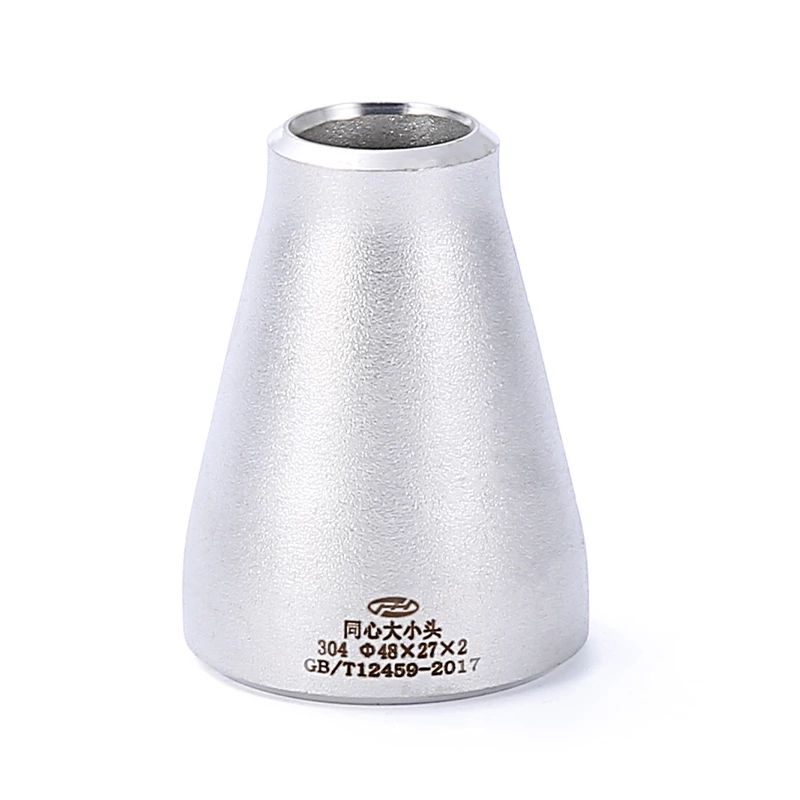
Butt Weld Reducer Manufacturing: The Plate Forming Method Few Specifiers Consider
Piping systems rely on transition fittings to connect pipes of different diameters, and the manufacturing route behind each fitting shapes its strength, cost, and lead time. Most specifiers assume a butt weld reducer comes only from seamless pipe stock. A lesser-known production path uses flat steel plate instead, and it changes several assumptions about sizing flexibility and delivery.
Why Manufacturing Method Shapes Concentric Reducer Performance
Wall thickness consistency, grain structure, and residual stress all trace back to how a fitting was formed. Two versions of the same concentric reducer can behave very differently under pressure if one was hot formed from tube and the other cold formed from plate. Recognizing this distinction helps teams avoid mismatched expectations during procurement.
Traditional Routes for Producing Pipe Reducers
Seamless Forming from Pipe Stock
Seamless reducers start as a length of pipe that is heated and swaged down to a smaller diameter on one end, for example a 300 mm to 150 mm transition. This route produces a one-piece fitting without a longitudinal seam. Diameter range stays tied to available pipe sizes, and large-diameter seamless stock often carries long lead times.
Welded Construction from Rolled Plate
Another common method rolls flat plate into a cone shape and welds the seam along its length before final sizing. This approach reaches diameters seamless pipe cannot easily supply, sometimes above NPS 24, and suits lower-pressure or larger-bore applications. The weld seam undergoes inspection and, in many cases, is ground flush.
The Plate Stamping Alternative
A concentric pipe reducer can also be produced through stamping a flat steel blank between matched dies, pressing it into a tapered shape in one or two operations. This route suits shops producing fittings in repeat batches of fifty pieces or more, since tooling costs are recovered across volume rather than a single order.
How the Stamping Sequence Works
-
A circular blank is cut from steel plate to a calculated diameter.
-
The blank is heated, if the grade requires it, then set in a forming die.
-
A press applies controlled force, drawing the plate into a conical shape.
-
The formed shell is trimmed, and ends are prepared for beveling.
-
The piece undergoes inspection for wall thickness and roundness before shipment.
Can Reducers Be Formed From Steel Plate Instead of Pipe?
Yes, a stainless steel concentric reducer can be manufactured from flat plate through press forming rather than only from seamless pipe. The plate is cut, formed under a die, and trimmed to the required taper, offering an alternative path when pipe stock in the needed diameter runs scarce or costly.
Comparing the Three Production Methods
| Method | Starting Material | Seam Present | Typical Diameter Range | Relative Lead Time |
|---|---|---|---|---|
| Seamless forming | Pipe | No | Small to mid-size | Longer for large sizes |
| Rolled and welded | Flat plate | Yes, inspected | Mid to large | Moderate |
| Stamped or pressed | Flat plate | No, one piece | Small to mid-size, volume dependent | Shorter once tooling exists |
Material Behavior During Forming
Stainless steel work-hardens as it is drawn into shape, so press parameters must account for reduced ductility partway through the operation. Excessive force in a single pass can cause thinning or cracking at the shoulder. Multi-stage pressing, sometimes paired with an intermediate anneal, keeps wall thickness within the tolerance a project specification demands.
Standards and Dimensional Checks
Most piping specifications reference ASME B16.9 for the overall dimensions and tolerances of a butt weld concentric reducer, a standard that covers sizes up to NPS 48, regardless of the forming method used. Wall thickness at the small and large ends, out-of-roundness, and bevel angle are typical inspection points, with tolerances commonly around minus 12.5 percent on nominal thickness.
Selecting a Production Method for a Project
Factors Worth Weighing
-
Required diameter and whether matching pipe stock exists.
-
Order quantity, since stamping tooling favors repeat volume.
-
Pressure rating and whether a seam is acceptable for the service.
-
Lead time against a project schedule.
-
Wall thickness tolerance required under the governing standard.
Final Notes on Production Choice
Choosing between seamless, rolled-and-welded, or stamped production is rarely about one method being universally superior. Each route trades diameter flexibility, seam presence, and lead time differently, and matching the method to order volume and pressure requirements typically brings a more reliable outcome than defaulting to the most familiar option.