Corrosion Failures In Stainless Steel Weld Elbows Across Three Manufacturing Stages
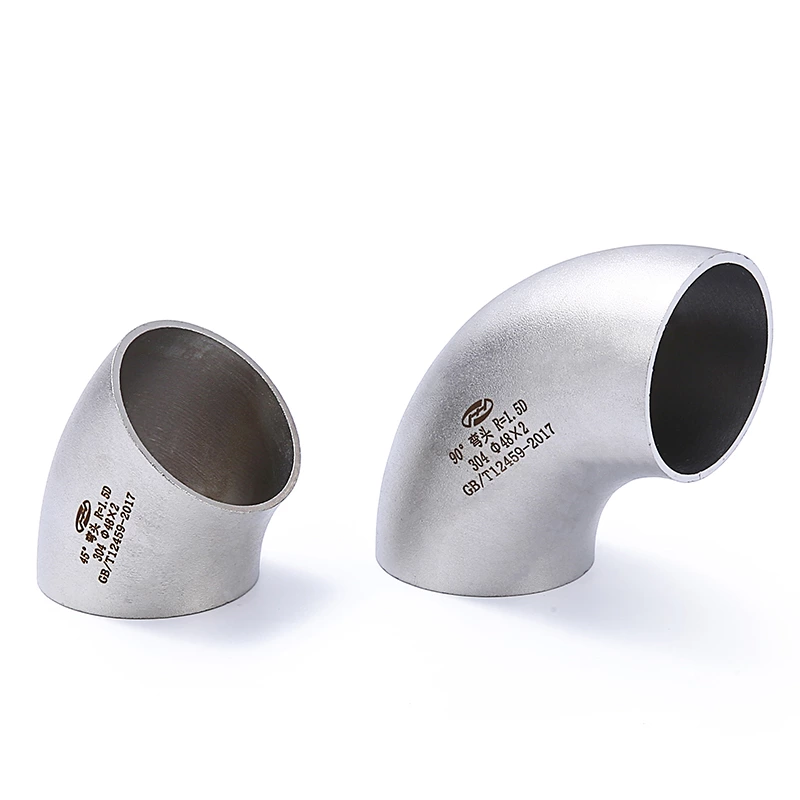
Selecting premium raw alloys never guarantees field reliability in industrial fluid systems. True corrosion resistance in stainless steel weld elbows depends entirely on precise execution during cold forming, seam welding, and solution annealing rather than initial base metal chemistry alone.
Raw pipes with certified mill test reports frequently suffer premature pitting inside chemical processing plants. The transition from straight tubing to a finished butt weld elbow introduces severe mechanical and thermal stresses that alter the protective passive film.
Manufacturing Defects That Destroy Alloy Corrosion Resistance
Three distinct production phases dictate the final metallurgical integrity of piping components:
-
Cold Forming: Mechanical bending induces strain-hardening martensite and creates localized residual tensile stress across the extrados.
-
Seam Welding: Improper heat input triggers carbide precipitation along grain boundaries and destroys the protective chromium oxide layer.
-
Heat Treatment: Inadequate solution annealing or slow quenching leaves intermetallic phases intact, accelerating localized intergranular attack in acidic media.
Mechanical Forming Risks and Microstructural Distortion
Strain Hardening and Residual Stress Accumulation
Bending a long radius stainless steel elbow requires extreme hydraulic force across a mandrel or die. This plastic deformation converts stable austenite into deformation-induced martensite, significantly raising the hardness level and lowering resistance to chloride-induced stress corrosion cracking.
Surface Iron Contamination from Tooling
Carbon steel dies and mandrels frequently transfer microscopic free iron particles onto the fitting surface during pressing. Unless removed via thorough acid pickling and passivation, these embedded particles rust rapidly upon moisture exposure and initiate deep crevice corrosion.
Welding Flaws That Compromise the Passive Layer
Sensitization Within the Heat-Affected Zone
Fabricating a large-diameter steel butt welding elbow involves longitudinal seam fusion where thermal cycles reach between 450°C and 850°C. Within this temperature window, carbon diffuses toward grain boundaries to form chromium carbides, depleting adjacent matrix zones below the 10.5% chromium threshold.
Oxidation and Root Backing Gas Failure
Incomplete argon purging during root pass fusion creates dark heat tint and rough oxide scales along the interior seam. Even high-purity stainless steel tube elbows experience rapid microbiological and pitting corrosion along oxidized weld roots where chromium depletion occurs.
Thermal Processing Errors and Incomplete Phase Recovery
Insufficient Solution Annealing Temperatures
Authentic solution annealing demands heating austenitic grades above 1040°C to dissolve precipitated carbides back into the solid matrix. Furnaces operating with cold spots or shortened soak times leave residual sigma phases untouched, resulting in brittle fracture and chemical degradation.
| Manufacturing Stage | Primary Metallurgical Defect | Resulting Corrosion Mechanism | Verification Method |
|---|---|---|---|
| Cold Forming | Strain-induced martensite and high residual stress | Chloride stress corrosion cracking | Ferrite scope testing and hardness checks |
| Seam Welding | Chromium carbide precipitation and root oxidation | Intergranular and localized pitting attack | ASTM A262 Practice E oxalic acid etch |
| Solution Annealing | Incomplete carbide dissolution and slow cooling | Rapid grain boundary disintegration | Metallographic examination at 400x magnification |
Delayed Quenching Rates
Rapid water quenching must immediately follow furnace extraction to cool the metal below 425°C within three minutes. Air cooling or delayed immersion allows carbides to re-precipitate throughout the entire wall thickness, rendering the component useless in corrosive service.
Quality Control Protocols for Specifying Reliable Fittings
Procurement teams and piping engineers prevent catastrophic field leaks through strict inspection mandates prior to installation:
-
Verify full furnace chart records confirming minimum annealing temperatures above 1040°C followed by immediate water quenching.
-
Mandate intergranular corrosion testing in accordance with ASTM A262 standards on sacrificial production ring samples.
-
Require ferroxyl testing to confirm zero free iron contamination after nitric-hydrofluoric acid pickling and passivation treatments.
-
Inspect internal weld seams via borescope to reject any dark blue or black oxidation scales before hydrotesting.