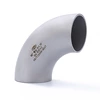
Manufacturing Process Of Swage And Expansion For Concentric And Eccentric Reducers
The production of high-quality pipe components requires precision engineering, especially when transitioning between different pipe diameters. Reducing and expanding press technology stands as a cornerstone in shaping these essential fittings to meet rigorous industrial standards.
Advanced Forming Techniques for Pipe Reducers
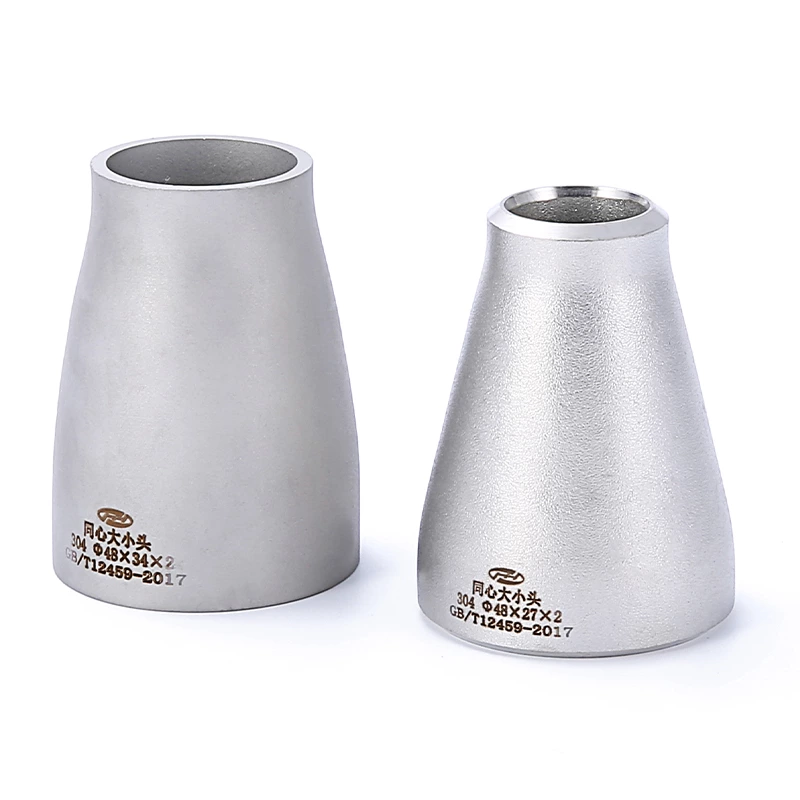
The manufacturing of a concentric pipe fitting often involves a cold or hot pressing process known as "swage and expansion." This method allows manufacturers to adjust the diameter of a seamless pipe to the desired specification without compromising the structural integrity of the metal.
To achieve the perfect fit, a concentric pipe fittings production line utilizes specialized dies. For instance, when a pipe end is forced into a die smaller than its original diameter, it undergoes "reduction." Conversely, using a punch to enlarge the diameter is termed "expansion." Often, a combination of both is used to reach the precise dimensions required for complex piping systems.
Key Classifications in Industrial Piping
When selecting the right component for fluid dynamics, understanding the specific type of reducer is vital. Most projects involve two primary geometries:
-
Concentric Bell Reducer: This type features a symmetrical shape where both ends share a common center line. It is ideal for vertical installations to prevent cavitation.
-
Concentric Eccentric Reducer: While "concentric" and "eccentric" are usually opposites, in the context of versatile procurement, a concentric eccentric reducer setup refers to the availability of both symmetrical and offset options to handle different drainage or horizontal flow requirements.
Technical Specifications and Tolerances
Precision is non-negotiable. Below is a simplified look at standard processing parameters used during the pressing stage:
| Parameter Type | Standard Range (mm) | Tolerance (%) |
| Wall Thickness | 2.0 - 60.0 | ±12.5 |
| Outer Diameter | 21.3 - 1219.2 | ±1.0 |
| Surface Hardness | 150 - 190 HB | N/A |
Step-by-Step Production Flow
The manufacturing sequence ensures that every concentric bell reducer maintains uniform wall thickness and smooth internal surfaces.
-
Material Preparation: Selecting the raw seamless pipe based on the final grade requirement.
-
Induction Heating: Applying localized heat to make the steel more ductile for the expansion phase.
-
Dual-Action Pressing:
-
The pipe is first compressed to reduce the neck size.
-
The middle or opposite section is expanded using internal mandrels.
-
-
Heat Treatment: Stress-relieving the metal after the mechanical deformation to prevent future cracking.
-
Surface Finishing: Shot blasting and coating to ensure corrosion resistance in harsh environments.
Using these systematic steps, the resulting components provide a reliable transition in high-pressure oil, gas, and chemical processing plants.