Maintaining The Integrity Of Stainless Steel Tees: Connection Inspection Guide
In the architectural layout of industrial piping, the structural durability of branching components dictates the safety of the entire operation. When managing high-pressure or corrosive media, technical teams must prioritize the physical evaluation of intersection points. Identifying early signs of wear at the ss t joint prevents unforeseen downtime and maintains the equilibrium of the fluid network.
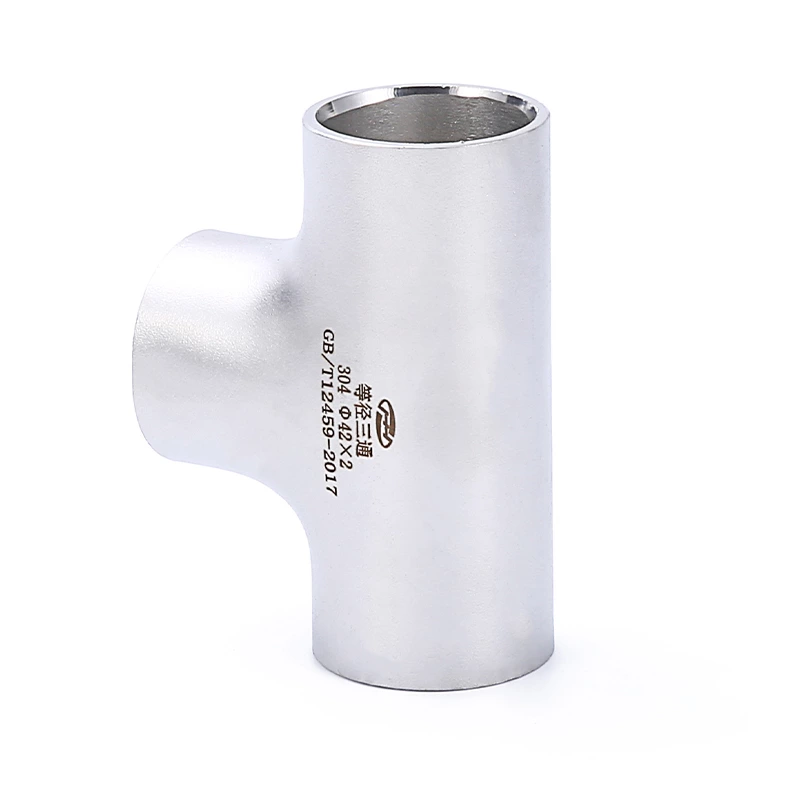
Technical Analysis of the ss tee fitting
Within a standard pipeline configuration, the ss tee fitting serves as the primary junction for directional changes. Thermal expansion and internal pressure fluctuations frequently exert mechanical stress on these specific nodes. Utilizing non-destructive testing (NDT) methods, such as liquid penetrant or ultrasonic exams, allows for the detection of sub-surface fissures near the weld neck or threading. This localized scrutiny of the connection zone remains a mandatory protocol for high-standard maintenance.
Precision Standards for the stainless pipe tee
Optimizing the performance of a stainless pipe tee involves a multi-dimensional inspection approach:
-
Dimensional Stability: Comparing current measurements against the original installation blueprint to identify branch centerline deviations.
-
Fastener Torque: Verifying that flange bolts meet the specific Newton-meter requirements to negate the risks associated with operational vibration.
-
Metallurgical Integrity: Scanning the edges for pitting or localized discoloration, which typically indicates the onset of electrochemical corrosion.
Specialized Integration of the stainless reducing tee
In systems where flow volume transitions occur, the stainless reducing tee requires even more granular attention. The internal turbulence generated at the diameter transition point can lead to accelerated wall thinning. Routine wall-thickness gauging at these specific joints provides the data necessary for predictive replacement cycles before structural compromise occurs.
Implementation of the ss tee 1 2 in Micro-Systems
For smaller-scale instrumentation or auxiliary lines, the ss tee 1 2 must be checked for thread galling or seal compression. Even in low-diameter applications, the mechanical load at the junction remains a potential point of failure. Selecting the correct sealant chemistry for these interfaces maintains a vacuum-tight environment throughout the service life of the component.