How Stainless Steel Elbows Are Welded To Pipes: A Technical Guide
Understanding the Welding Connection Method for Stainless Steel Pipe Elbows
Stainless steel pipe elbows are most reliably joined to pipelines through welding — a process that fuses the base material by applying concentrated heat until both surfaces melt and bond into a single, continuous joint. This method eliminates mechanical gaps, reduces leak risk, and delivers the structural integrity required in demanding industrial environments.
What Is a Weld-Type Stainless Steel Elbow?
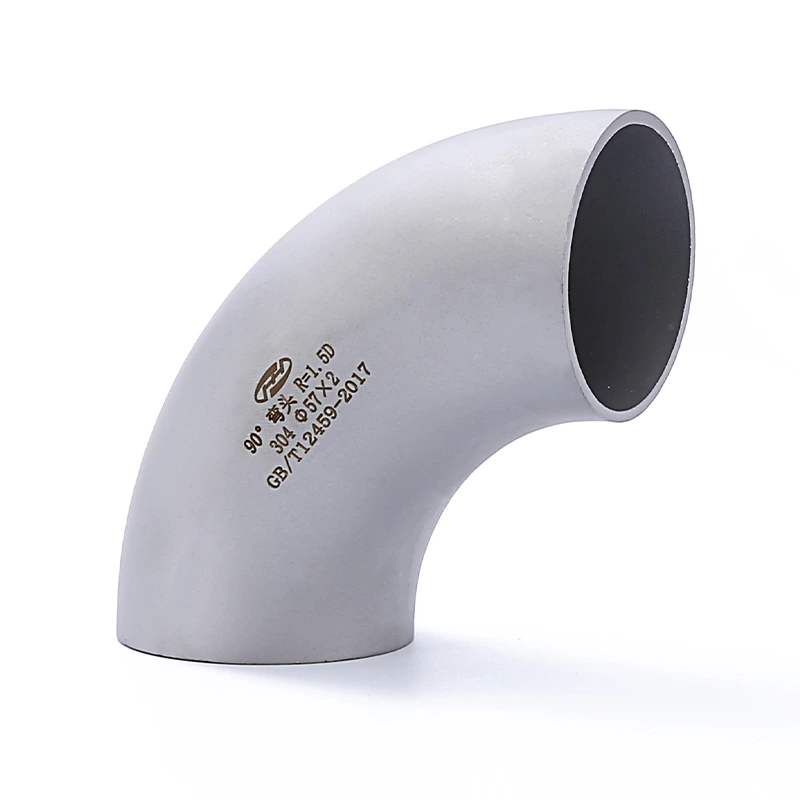
Stainless weld elbows are fittings designed specifically for butt-weld or socket-weld installation. Unlike threaded fittings, they require no sealant compounds and are preferred in high-pressure, high-temperature, or corrosive-media systems.
Common configurations include:
| Fitting Type | Angle | Typical Application |
|---|---|---|
| Short-radius elbow | 90° | Compact piping layouts |
| Long-radius elbow | 90° | Low-pressure drop flow paths |
| Return elbow | 180° | U-bend and return lines |
| Reducing elbow | 90° | Diameter transitions |
A 180 degree stainless steel pipe elbow, for example, is used where the flow must reverse direction entirely — common in heat exchanger loops and compressed air returns.
Step-by-Step: How to Weld a Stainless Steel Elbow to a Pipe
Can you weld a stainless steel elbow directly to a pipe? Yes. The process involves aligning the fitting, tack welding to hold position, then completing a full root pass followed by cap passes using TIG or MIG welding with a matching filler rod.
For a 1 inch 90 degree elbow steel fitting, the procedure follows standard ASME B16.9 butt-weld practice:
- Clean and bevel pipe ends to the specified angle
- Align the 1 2 stainless steel 90 degree elbow to the pipe axis
- Apply tack welds at 90° intervals
- Complete root pass with back-purge argon shielding
- Inspect weld profile before applying fill and cap passes
When working with a stainless steel 90 degree elbow 1 2 inch fitting in sanitary or food-grade lines, internal weld beads must be ground flush to prevent contamination buildup.
Why Welding Outperforms Other Connection Methods
Welded joints offer superior leak resistance, longer service life, and cleaner flow dynamics compared to threaded or flanged alternatives — making them the preferred choice across oil and gas, pharmaceutical, and water treatment industries.