Tapered Perspective and Butt Weld Reducer Geometry in Tilt-Shift Optics
In photography, upward camera tilt creates a wide-base, narrow-top convergence resembling the symmetrical taper of a butt weld reducer. Tilt-shift optics resolve or intentionally amplify this geometric distortion through independent control over the lens plane and image sensor.
Optical Mechanics Behind Tapered Vertical Convergence
-
Sensor Pitch Angle: Tilting a conventional camera upward places the lower subject edge closer to the optical center than the upper edge.
-
Magnification Gradient: Varying object distance across the frame produces progressive scale reduction from bottom to top, forming converging vertical lines.
-
Geometric Projection: Parallel structural boundaries project onto the sensor plane as an inward-tapering trapezoid rather than an orthographic rectangle.
This optical taper mirrors the axial transition found in a butt weld reducer, where a wider inlet narrows symmetrically toward a smaller outlet. Without mechanical perspective correction, technical photographs of vertical structures distort dimensional ratios and obscure true centerline alignment.
Two Specialized Tilt-Shift Applications for Tapered Geometry
Eliminating Perspective Taper Through Parallel Axis Shift
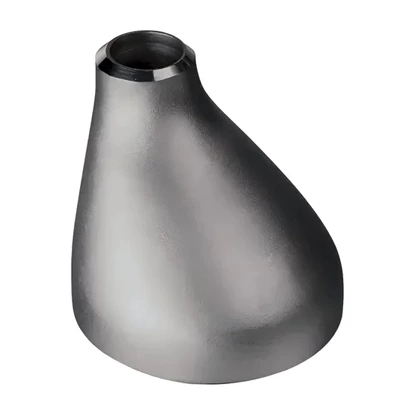
Sliding the front lens element upward along a calibrated rack keeps the sensor plane strictly parallel to vertical surfaces. This shift movement captures full structural height while preserving true parallel edges, preventing false tapering when documenting architecture or a stainless steel concentric reducer.
Amplifying Tapered Profiles Through Reverse Tilt Control
Applying the Scheimpflug principle through reverse lens tilt angles the focal plane away from the subject axis. This optical adjustment compresses depth of field and exaggerates converging lines, turning a symmetrical concentric fitting silhouette into an expressive visual anchor with heightened spatial tension.
Comparison of Optical Shift and Tilt Adjustments
| Optical Movement | Mechanical Action | Focal Plane Orientation | Visual Taper Effect | Primary Application |
|---|---|---|---|---|
| Parallel Shift | Lateral or vertical translation | Remains parallel to sensor | Eliminates vertical convergence | Architectural and metrology documentation |
| Forward Tilt | Downward angular rotation | Tilts toward subject plane | Expands depth across flat surfaces | Product and landscape sharpness |
| Reverse Tilt | Upward angular rotation | Tilts away from subject plane | Amplifies converging taper | Creative isolation and spatial drama |
-
Image Circle Diameter: Oversized projection coverage prevents mechanical vignetting during extreme lateral or vertical lens translation.
-
Shift Translation Range: Calibrated millimeter scales allow repeatable offset adjustments without altering the camera tripod position.
-
Tilt Rotation Axis: Precision locking mechanisms stabilize angular deflection to maintain consistent focus across inclined planes.
Structural Alignment in Industrial and Optical Design
Precision geometry governs both lens mechanics and fluid piping hardware. Manufactured to ASME B16.9 tolerances, a stainless concentric reducer aligns pipe centerlines along a single axis, preventing turbulent flow separation and uneven wall stress across transitions between dissimilar nominal pipe diameters.
This dual behavior reveals a broader visual principle across technical and artistic disciplines. The exact same tapered profile represents an optical error requiring elimination in architectural measurement yet serves as expressive visual language in creative composition, governed entirely through communicative intent.
FAQs
Q:Can tilt-shift lenses fully correct severe vertical convergence on tall structures?
A:Standard tilt-shift lenses offer up to twelve millimeters of vertical shift, which corrects moderate upward convergence. Extreme elevation angles may still require stepping farther back or combining optical shift with calibrated digital perspective adjustment during post-processing.
Q:When does exaggerated perspective taper improve visual composition?
A:Exaggerated taper strengthens visual impact when emphasizing towering scale, dramatic symmetry, or upward movement. Applying reverse tilt narrows the sharp focal plane, isolating tapered architectural lines or cylindrical hardware against a softly blurred background.
Q:Does a butt weld reducer share geometric traits with optical perspective taper?
A:Both forms transition smoothly from a wide base diameter to a narrow top diameter along a shared central axis. While optical taper results from angular sensor projection, a butt weld reducer is physically formed to maintain uniform axial fluid flow.