Analysis Of Heat Treatment Process For Reducers: Key Technologies For Improving Strength, Corrosion Resistance, And Stability
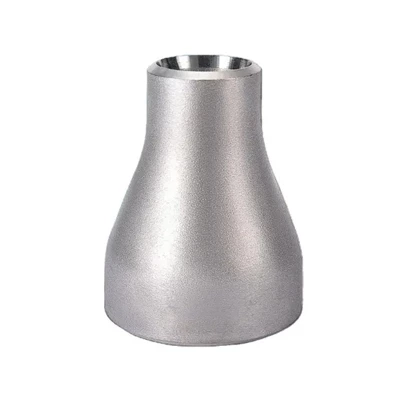
concentric fitting are commonly used pipe fittings, typically connecting two pipes of different diameters in a piping system. Their main function is to achieve a smooth transition between pipes, ensuring the stability of liquids, gases, and other media during flow. The manufacturing and use of reducers require extremely high technical standards, especially in heat treatment processes, to ensure sufficient strength, corrosion resistance, and long-term reliability.
This article will detail the heat treatment process for flanged concentric reducer, including its purpose, procedure, and common methods.
Purpose of Heat Treatment
Heat treatment alters the physical and mechanical properties of metallic materials through processes such as heating, holding, and cooling, thereby improving their structure. For reducers, heat treatment primarily aims to achieve the following:
-
Increasing Strength and Hardness: During production, reducers need to withstand significant pressure, especially in high-pressure pipeline systems such as those used in oil and natural gas. Heat treatment increases their hardness and strength, enhancing their pressure resistance.
-
Improving Corrosion Resistance: For 6 x 3 reducer used in special environments (such as chemical and marine environments), corrosion resistance is crucial. Heat treatment optimizes the alloy composition and microstructure, enhancing their corrosion resistance.
-
Relieving Internal Stress: During the manufacturing process, reducers may develop internal stress due to uneven cooling or other factors. If this stress is not relieved in time, it may affect their long-term stability. Heat treatment can effectively eliminate internal stress.
-
Improving Plasticity and Toughness: Heat treatment can improve the plasticity and toughness of 10 x 8 concentric reducer, reducing the risk of brittle fracture at high temperatures or in extreme environments.
Common Heat Treatment Methods
- Annealing
Annealing is a process of heating the material to a certain temperature, holding it for a certain time, and then slowly cooling it. Annealing can reduce the hardness of the material, improve its machinability, and eliminate internal stress. For reducer production, annealing helps improve its ductility and toughness, and reduces the impact of stress generated during heat treatment on the material.
- Quenching and Tempering
Quenching involves heating the 12 x 6 concentric reducer to a high temperature and then rapidly cooling it, usually in water, oil, or air, to increase its hardness and strength. Tempering involves heating the material to a certain temperature after quenching and then slowly cooling it to reduce the brittleness generated during quenching and improve its toughness. For reducers requiring high strength and hardness, quenching and tempering are commonly used heat treatment methods.
- Normalizing
Normalizing is a process of heating reducers to a high temperature and then cooling them in air. Normalizing refines the metal's grain structure, making it more uniform and improving mechanical properties, especially strength and hardness. It is a common treatment for reducers with high performance requirements.
- Aging Treatment
Aging treatment involves holding the 3 x 2 concentric reducer at a specific temperature for a period of time, allowing alloying elements to gradually precipitate, thereby increasing the material's strength and hardness. For some special alloy reducers, aging treatment can improve their overall performance.
Post-Heat Treatment Inspection and Quality Control
After heat treatment, the performance changes of the reducers need to be assessed through a series of tests to ensure they meet requirements. Common testing methods include:
-
Hardness Testing: Measuring the hardness value of the 4 in x 2 1 2 in cone reducer using a hardness tester to ensure it meets design requirements.
-
Mechanical Property Testing: Including tensile tests and impact tests to evaluate its strength, plasticity, and toughness.
-
Metallographic Analysis: Observing the grain structure of the material under a microscope to analyze its structure and uniformity.
-
Surface defect detection: Methods such as X-ray inspection and ultrasonic testing are used to ensure the 4 x 2 concentric reducersurface is free of defects.
Conclusion
Heat treatment is a crucial step in ensuring the stable performance and adaptability of reducers to complex working conditions. Different heat treatment methods can improve their hardness, strength, toughness, and corrosion resistance, guaranteeing reliability and safety during long-term use. As a reducer manufacturer, it is essential to strictly control the heat treatment process and use scientific quality testing methods to ensure that every product meets the high standards required by customers.